

Lift and Slide vs. Standard Sliding Doors: Key Differences Explained for Homeowners
Uncover the fundamental distinctions between lift and slide vs standard sliding doors. Learn about their unique mechanisms, operational benefits, and ideal uses to select the perfect high-performance patio door for your architectural project.
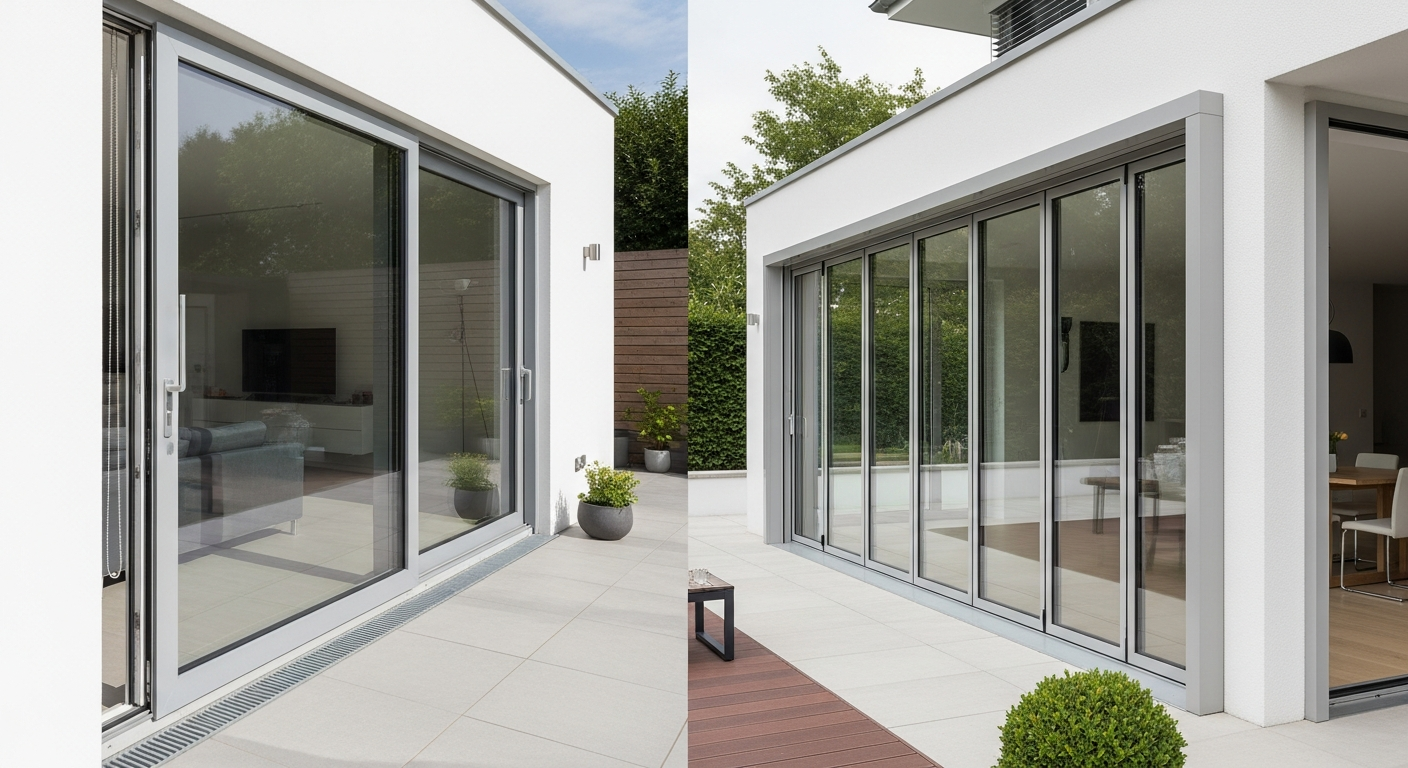
Elevating Your Home's Connection to the Outdoors: Lift and Slide vs. Standard Sliding Doors
When envisioning a seamless transition between indoor and outdoor living spaces, patio doors play a pivotal role. For homeowners and architects alike, selecting the right system can significantly impact aesthetics, performance, and functionality. Among the most popular options are standard sliding doors and their more advanced counterparts, lift and slide doors. While both offer wide openings, their underlying mechanisms, benefits, and ideal applications vary considerably. Understanding the key differences between lift and slide vs standard sliding doors is essential for making an informed decision that meets your design aspirations and practical needs.
Understanding the Core Mechanisms
The primary distinction between these two door types lies in how they operate and seal. This fundamental difference dictates much of their performance.
How Standard Sliding Doors Work
Standard sliding doors, often found in traditional patio applications, operate on a relatively simple principle. One or more door panels are fitted with rollers that glide along a track within the door frame. When opening, the active panel slides horizontally over or past a fixed panel. The sealing mechanism typically relies on a combination of weather stripping and brushes that compress when the door is closed, providing a barrier against the elements. This design is straightforward and cost-effective, making it a popular choice for many homes.
The Innovation of Lift and Slide Doors
Lift and slide doors represent an evolution in sliding door technology. Their operation is more sophisticated: when you turn the handle, the door panel is first slightly lifted off its weather seals and track. This lifting action disengages the seals, allowing the heavy panel to glide effortlessly on its rollers with minimal friction. Once the door is in the desired position, turning the handle back down lowers the panel, compressing it firmly onto the frame and seals. This unique ‘lift and lock’ mechanism creates an incredibly tight, robust seal around the entire perimeter of the door, fundamentally differentiating them from standard sliding doors.
Key Differences in Performance and Benefits
The distinct mechanisms of lift and slide vs standard sliding doors translate into significant differences in their real-world performance.
Effortless Operation and Smoothness
Perhaps the most immediate difference you'll notice is in operation. Standard sliding doors, especially larger ones, can sometimes require a bit of force to open and close, and their rollers may accumulate debris over time, leading to a less smooth glide. Lift and slide doors, on the other hand, are renowned for their remarkably smooth and almost effortless operation. Because the panel is lifted clear of the seals and track before sliding, even very large and heavy glass panels can be moved with surprising ease, giving a luxurious feel.
Enhanced Weather Sealing and Thermal Efficiency
This is where lift and slide doors truly excel. When a standard sliding door is closed, its weather seals offer a good level of protection, but they primarily rely on compression and brushes, which can be vulnerable to extreme wind, rain, and temperature fluctuations. The 'lift and lock' mechanism of lift and slide doors creates a superior, airtight, and watertight seal, as the door panel literally sits down onto heavy-duty gaskets. This results in outstanding thermal insulation, reducing heat loss in winter and heat gain in summer, leading to significant energy savings. They also offer excellent sound insulation.
Security and Durability
The robust construction and sealing mechanism of lift and slide doors contribute to their enhanced security. When the door is lowered and locked into position, the entire weight of the panel rests firmly within the frame, making it extremely difficult to force open. Their heavy-duty hardware is designed for longevity, ensuring smooth operation for many years. While modern standard sliding doors offer good security features, the inherent design of lift and slide systems often provides an additional layer of protection and structural integrity.
Design Flexibility and Large Openings
For architectural projects demanding expansive, unobstructed views, lift and slide doors are often the preferred choice. Their superior engineering allows for much larger individual panels and wider opening configurations than typically achievable with standard sliding doors. This means fewer vertical frames interrupting your view and the ability to create truly grand openings that seamlessly merge indoor and outdoor spaces. Standard sliding doors are excellent for more modest openings but may be limited when extreme spans or very heavy glass are desired.
Applications, Cost, and Considerations
Deciding between lift and slide vs standard sliding doors often comes down to balancing desired features with budget and specific project requirements.
Ideal Scenarios for Each Door Type
- Standard Sliding Doors: Ideal for homeowners seeking a reliable, cost-effective patio door solution for standard-sized openings. They are a practical choice for renovations or new builds where budget is a primary consideration, and good performance is sufficient.
- Lift and Slide Doors: Best suited for premium homes, architectural projects, or anyone prioritizing superior thermal performance, exceptional ease of operation, maximum security, and the ability to achieve very large, expansive glass openings. They are perfect for creating stunning visual connections with a garden, terrace, or scenic view.
Investment and Long-Term Value
Generally, the initial investment for lift and slide doors is higher than for standard sliding doors. This is due to their more complex mechanism, heavier-duty hardware, and ability to handle larger glass panels. However, the long-term value provided by lift and slide systems – including significant energy savings, enhanced comfort, superior durability, and increased property value – often justifies the higher upfront cost. For those seeking the pinnacle of performance and luxury in a patio door, the benefits outweigh the initial expenditure.
Choosing Your Ideal Sliding Door Solution
When comparing lift and slide vs standard sliding doors, it's clear that both offer compelling advantages depending on your specific needs. Standard sliding doors provide a practical, budget-friendly solution with good performance for everyday use. Lift and slide doors, however, elevate the experience with their unmatched ease of operation, superior weather sealing, enhanced security, and capacity for grand architectural statements. By carefully considering your priorities – whether it's budget, energy efficiency, ease of use, or the desire for monumental openings – you can select the perfect sliding door system to transform your living space and create the connection to the outdoors you've always dreamed of.