

How Low U-Value PVC Windows Prevent Indoor Condensation Effectively
Learn how advanced low U-value PVC windows, with superior insulation and glazing, are your ultimate solution to prevent indoor condensation and enhance home comfort and energy efficiency.
Introduction: The Frustration of Window Condensation
Few things are as frustrating as waking up to dripping wet windows. Indoor condensation isn't just an aesthetic nuisance; it can lead to mold growth, damaged window frames, and reduced indoor air quality. If you've ever wondered how low U-value PVC windows prevent indoor condensation, you're in the right place. The secret lies in their superior thermal performance, designed to keep your home comfortable and dry year-round.
Understanding U-Value: Your Window's Thermal Report Card
Before diving into prevention, let's understand the hero of our story: the U-value. Simply put, the U-value (or thermal transmittance value) measures how effectively a window prevents heat from escaping your home. A lower U-value signifies better insulation and less heat loss. It's like a thermal report card for your windows—the lower the grade, the better it performs.
For windows, we typically look at three U-values:
- Uf (U-value frame): Measures heat loss through the window frame.
- Ug (U-value glass): Measures heat loss through the glazing unit.
- Uw (U-value window): The overall U-value for the entire window, combining the frame and glass performance.
High-quality PVC windows, like the Prime 80 series, are engineered with exceptionally low Uf values for their robust profiles, significantly contributing to the window's overall thermal efficiency.
The Condensation Conundrum: Why It Happens and Why It's Bad
Condensation forms when warm, moist air inside your home comes into contact with a cold surface, typically your window panes, and cools rapidly below its dew point. The air can no longer hold all its moisture, and the excess water vapor transforms into liquid droplets.
Common culprits for indoor moisture include showering, cooking, drying clothes, and even breathing. While a small amount of condensation might seem harmless, persistent moisture can lead to:
- Unsightly streaks and water damage on sills.
- Peeling paint or wallpaper around windows.
- Damage to timber frames, leading to rot.
- The growth of black mold, a health hazard for allergy sufferers and those with respiratory issues.
The Role of Cold Window Surfaces
Older, single-pane, or poorly insulated windows are notorious for becoming very cold on their interior surface during colder months. This stark temperature difference between the indoor air and the glass surface creates the perfect breeding ground for condensation. Addressing this cold surface is key to preventing the problem.
How Low U-Value PVC Windows Prevent Indoor Condensation
This is where advanced low U-value PVC windows prevent indoor condensation and truly shine. Their design is specifically engineered to keep the interior glass surface warmer, thereby raising its temperature above the dew point of the indoor air. This significantly reduces or entirely eliminates the conditions necessary for condensation to form.
Here's how they achieve this:
Superior Glazing Combinations
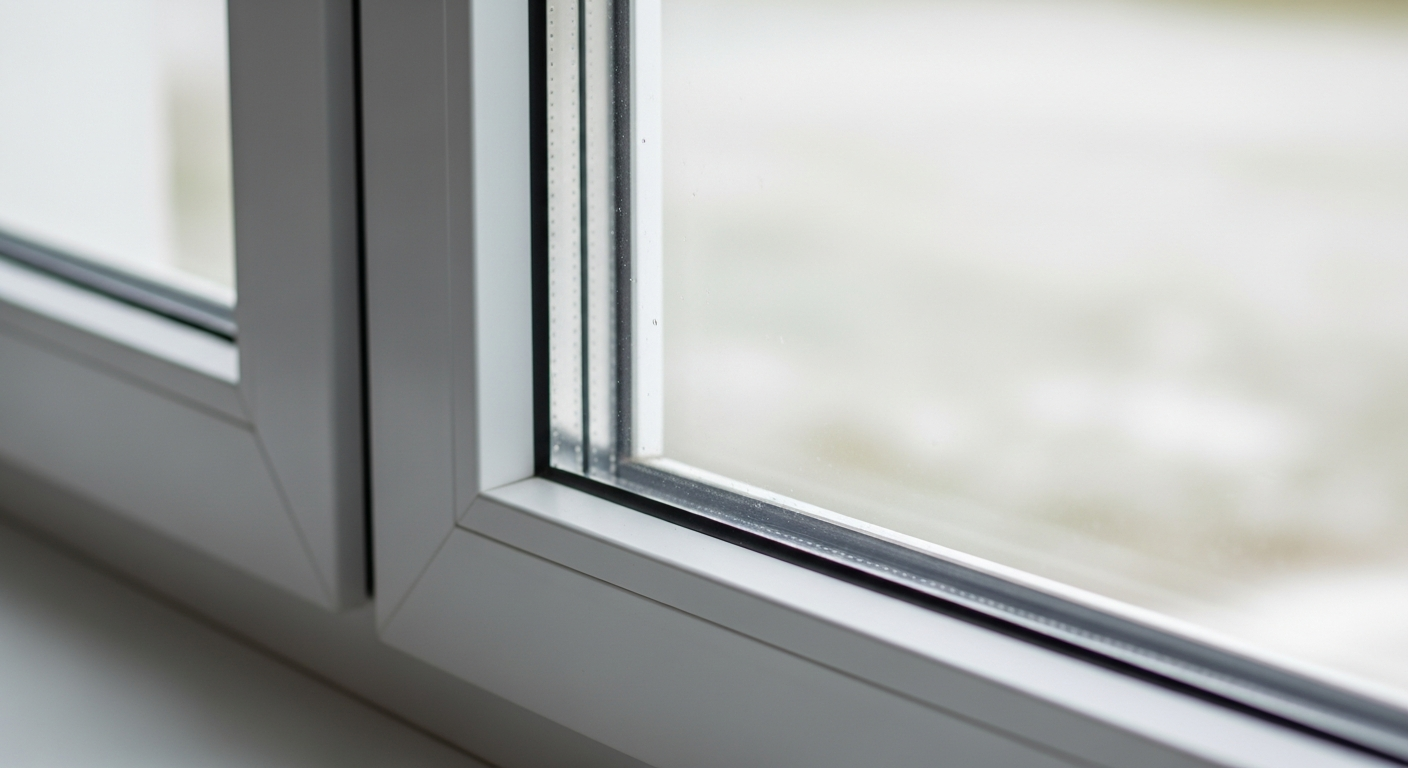
Modern PVC windows utilize sophisticated double or even triple glazing units. These units consist of multiple panes of glass (available in widths of 24, 30, 36, 44, and 52 mm) separated by sealed cavities filled with inert gases like argon or krypton. These gases are much denser than air and are poor conductors of heat, drastically reducing heat transfer.
- Double Glazing: Two panes of glass with an insulating gap.
- Triple Glazing: Three panes of glass with two insulating gaps, offering even better performance. Our source context highlights that 44 mm triple glass units can achieve ultra-low Ug values of 0.6–0.7 W/m²K.
By preventing heat from escaping through the glass, these units ensure the interior pane remains much closer to your room temperature, effectively preventing condensation.
High-Performance PVC Frames
It's not just the glass. The PVC (Unplasticized Polyvinyl Chloride) frame itself is an excellent insulator. Unlike metal frames that can act as thermal bridges, PVC frames have multi-chambered profiles that trap air, further enhancing their insulation properties. For instance, the robust sections mentioned in our source have a low thermal transmittance value (Uf) of 0.95 W/m²K, minimizing heat loss through the frame.
The Pimapen Prime 80 Series Advantage
When these advanced glass combinations are paired with high-performance frames, like those found in the Pimapen Prime 80 series, the results are remarkable. Windows fitted with 44 mm triple glass units in the Prime 80 series achieve an outstanding overall thermal transmittance value (Uw) of just 0.78 W/m²K. This superior insulation capacity is a direct defense against cold internal surfaces, making condensation a problem of the past and significantly improving your home's energy efficiency.
Beyond Condensation: Additional Benefits of High-Performance PVC Windows
While preventing condensation is a major perk, upgrading to low U-value PVC windows offers a host of other advantages:
- Reduced Energy Bills: Less heat escaping means less energy needed to heat your home, translating into significant savings on utility bills.
- Enhanced Indoor Comfort: Say goodbye to cold spots near windows and enjoy more consistent temperatures throughout your living spaces.
- Improved Sound Insulation: The multi-pane design and sealed units also excel at blocking outside noise, creating a quieter indoor environment.
- Increased Home Value: Energy-efficient windows are a desirable feature that can boost your property's market appeal.
Conclusion
Understanding how low U-value PVC windows prevent indoor condensation reveals the sophisticated engineering behind modern window technology. By ensuring warmer interior glass surfaces through advanced glazing and insulating frames, these windows tackle condensation at its root, offering a drier, healthier, and more energy-efficient home. If you're tired of battling window condensation, investing in high-performance PVC windows is a smart and sustainable solution for lasting comfort and peace of mind.